
Why Your Pepper or Chili Won't Set Fruit
Updated June 2026
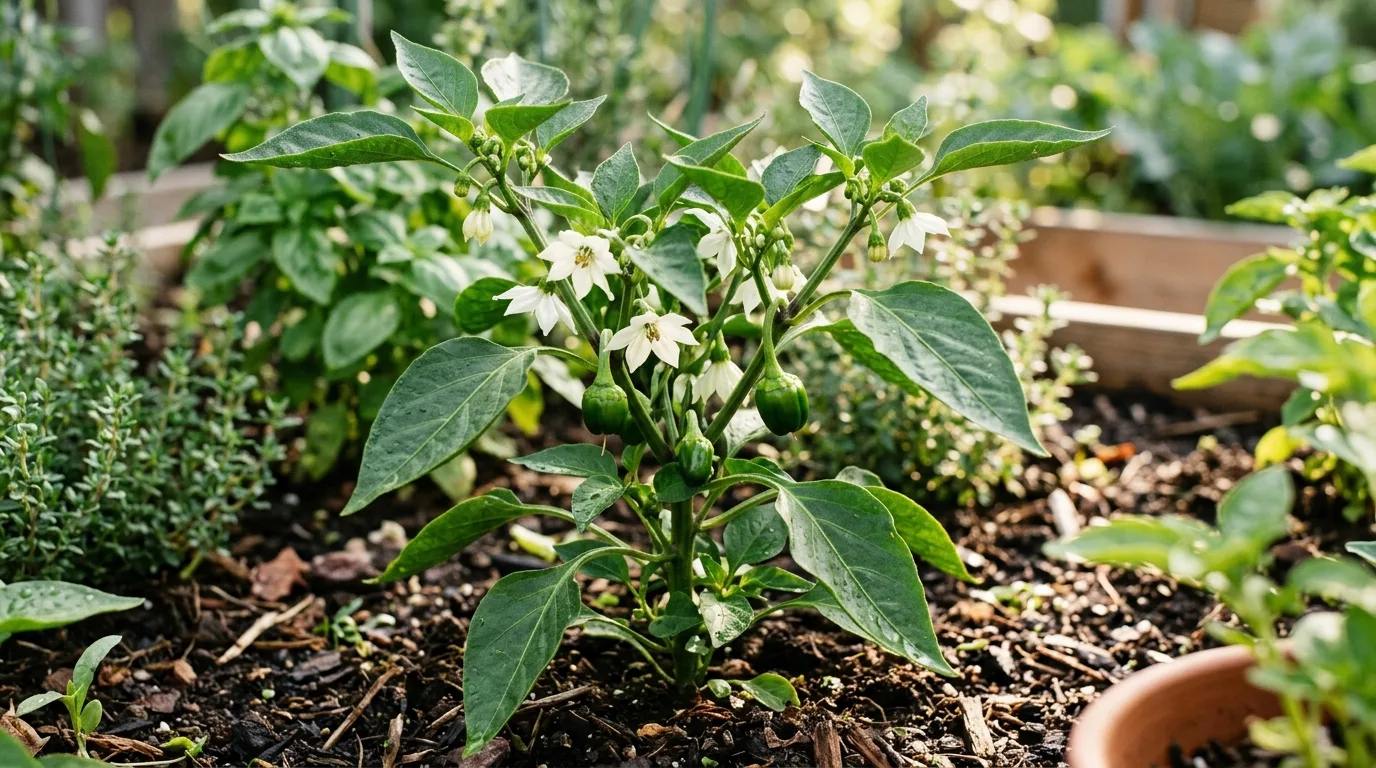
Plenty of flowers and no fruit is almost always temperature. Here is how to fix the set.
Your pepper or chili plant is healthy, covered in flowers, and yet no fruit appears, or the flowers simply drop off. Flower drop and poor fruit set is one of the most common problems with these crops, and it almost always comes down to temperature and a few easy-to-fix conditions.
Why the flowers drop without setting
- Heat. When days push past the mid-30s and nights stay warm, pepper and chili flowers abort instead of setting. This is the most common cause in a hot summer.
- Cold nights. Early in the season, nights below about 15 degrees also stop fruit set. Peppers want warm but not extreme conditions, roughly 18 to 30 degrees.
- Poor pollination. Still air, very humid or very dry conditions, and a lack of insect activity mean the flowers do not get pollinated.
- Too much nitrogen. Heavy nitrogen feeding pushes lush leafy growth at the expense of flowers and fruit.
- Water stress. Drying out while flowering causes the plant to drop its flowers to survive.
How to get fruit to set
Manage temperature
In heat, give the plants 30 percent afternoon shade and keep them well watered and mulched to buffer the roots. Early in the season, hold off planting until nights are reliably mild, or protect young plants on cold nights. The plant will resume setting fruit once it sits back in its comfortable range.
Help pollination along
Peppers and chili peppers are self-pollinating but need movement to shake the pollen. On still days, gently tap or flick the flowering stems, or give the plant a light shake each morning. Planting flowers nearby to draw in bees also helps.
Feed for fruit, not leaves
Ease off high-nitrogen feeds once the plant is flowering and switch to a feed higher in potassium, such as a tomato fertiliser. This tips the plant toward flowering and fruiting rather than leaf.
Water steadily
Keep moisture even. Both drying out and waterlogging stress a flowering plant into dropping its flowers. Mulch and a regular watering rhythm fix this.
When to expect fruit
Peppers are slow. From transplant it can be two to three months to the first ripe fruit, and they ripen from green through to red, yellow or orange over several more weeks. If your plant is flowering and the weather is in range, give it time before assuming something is wrong.
Catch problems before they cost you a crop
Track every bed in the Planting Season app, log what is going wrong, and get region-specific reminders so the same problem does not bite twice.
Open the App →Frequently Asked Questions
Why does my pepper flower but not fruit?
Almost always temperature. Days above the mid-30s or nights below about 15 degrees cause the flowers to drop without setting. Poor pollination, excess nitrogen and water stress are the other common causes.
How do I get my chili plant to set fruit?
Keep it in its comfortable range of about 18 to 30 degrees with afternoon shade in heat, tap the flowering stems to spread pollen on still days, feed with a higher-potassium fertiliser rather than high nitrogen, and water evenly.
Why are the flowers falling off my pepper?
Flower drop is the plant shedding flowers it cannot support, triggered by heat, cold nights, water stress or poor pollination. Fix the underlying condition and the next flush of flowers will hold and set fruit.
Do peppers need two plants to pollinate?
No. Peppers and chili peppers are self-pollinating, so a single plant will fruit. They just need some air movement or a gentle tap to shake the pollen within each flower, especially on still, still-air days indoors or under cover.
How long do peppers take to fruit?
Expect two to three months from transplant to the first green fruit, then several more weeks to ripen to red, yellow or orange. They are a slow crop, so give a healthy flowering plant time before assuming a problem.
See also: How to Grow Pepper and Chili peppers in Pots
Get next month's planting calendar, free
One email a month with exactly what to plant in your region, plus seasonal tips and harvest reminders. No spam, and you can unsubscribe any time.