
How to Grow Dragon Fruit
Updated June 2026
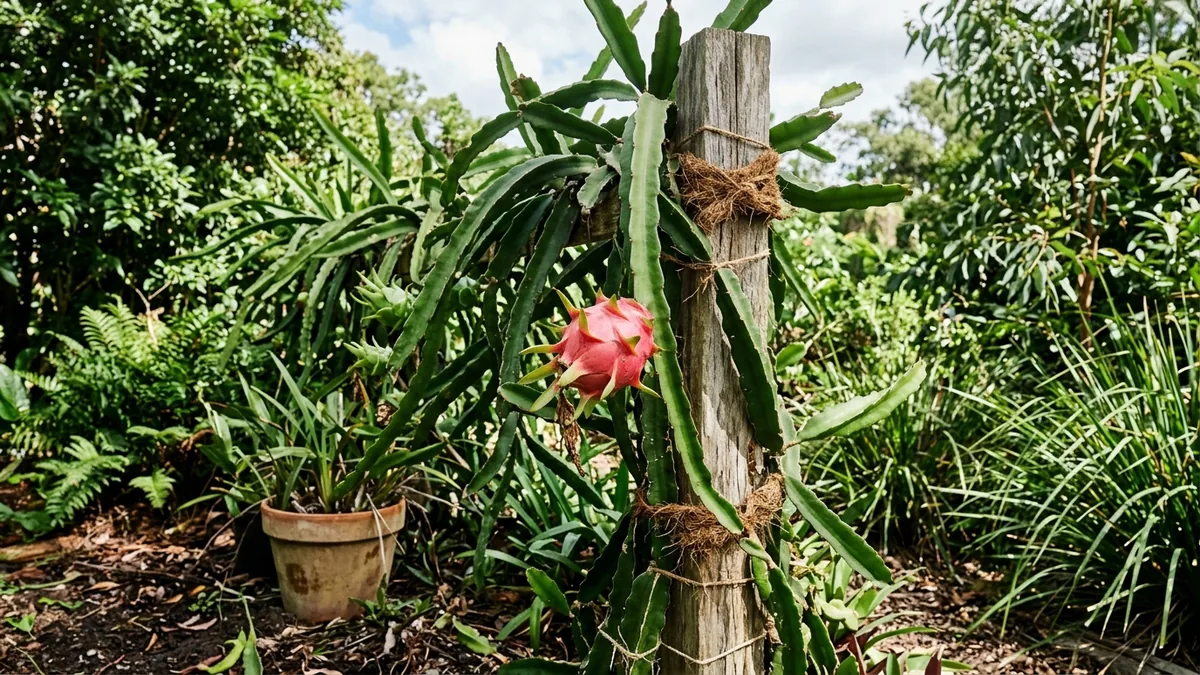
Pitaya is a climbing cactus that fruits fast and grows in the ground, in a pot, or under cover, depending on your USDA zone
Dragon fruit, also called pitaya, is a climbing epiphytic cactus in the Hylocereus and Selenicereus family. It is one of the most striking fruits you can grow, and one of the fastest, often fruiting within a couple of years from a cutting. It is frost-tender, but because it grows happily in a large pot, gardeners well outside the subtropics can still grow it by moving it under cover for winter.
This guide covers the varieties worth growing, how to build a support strong enough for a mature plant, the night-flowering and hand-pollination quirks that decide your harvest, and how to keep it alive through a cold winter. Use the zone tool below first to see exactly how dragon fruit fits where you garden.
Will dragon fruit grow where you are?
Dragon fruit has no chill requirement, so the only thing that limits it is frost. Pick your USDA zone band to see whether to grow it in the ground, in a pot you protect on cold nights, or in a pot you overwinter indoors, plus which varieties suit a one-plant or two-plant garden.
Climate and position by USDA zone
Dragon fruit wants full sun, warmth and sharp drainage. It is a cactus, so it tolerates heat and short dry spells far better than cold or soggy roots. A few degrees of frost will scorch the stems, and a hard freeze will kill an unprotected plant.
- Zones 10 to 11 (and frost-free 9b microclimates): grow in the ground in full sun. South Florida, far South Texas, coastal Southern California and Hawaii are ideal. This is where dragon fruit thrives outdoors year round.
- Zone 9: grow in a large pot so you can move or cover it on the rare frost night. In a warm, sheltered microclimate against a south wall some growers keep it in the ground with frost cloth on cold nights.
- Zone 8: grow in a pot and overwinter it in a frost-free greenhouse, sunroom or bright indoor spot. Bring it out once nights are reliably warm.
- Zones 6 to 7 and zones 4 to 5: container only. The plant lives outdoors through the warm months and comes inside under good light for the whole cold season. With enough summer warmth and a sunny window it can still fruit.
Planting
Start from a cutting of a named variety rather than seed. Cuttings fruit far sooner, usually in their second or third year, and they come true to type. Seed-grown plants can take five years or more and may not match the parent.
Let a fresh cutting callus for a few days in a dry, shaded spot, then plant it 2 to 3 inches deep in a free-draining cactus or citrus mix, right at the base of its support post. Plant in spring once the weather is reliably warm. In the ground, set plants about 6 to 8 feet apart if you are growing a row on separate posts. Water in lightly and keep the mix barely moist until new growth appears, which signals the roots have taken.
Watering and feeding
Dragon fruit likes more water than most cactus because it is naturally an epiphyte from humid forests, but it will rot in waterlogged soil. Water deeply when the top inch or two of mix dries out, roughly once or twice a week in hot weather, and back right off in cool weather and over winter. In a pot, never let it sit in a saucer of water.
Feed lightly and often through the warm season with a balanced or slightly potassium-rich fertilizer to support flowering and fruit. A low-nitrogen feed once flowering starts encourages fruit rather than leggy stem growth. Mulch the root zone in the ground to keep moisture even.
Pruning and support
Support is the single most important structure decision. A mature dragon fruit is heavy, reaching hundreds of pounds of stems, so it needs a very sturdy post, not a light trellis. The standard setup is a single thick post 5 to 6 feet tall set deep in concrete, topped with a ring, old tire or square frame. The stems climb the post, then cascade down from the top, and almost all flowers and fruit form on those hanging stems.
Train a single main stem straight up the post and tie it loosely as it grows. Once it reaches the top frame, let it branch and drape over the edge. Prune to keep the head open and manageable, remove any stems that crowd the center or trail on the ground, and take off damaged or diseased segments. Cuttings you remove can be calloused and planted to make new plants.
Pollination
This is where many growers lose a crop. The large, fragrant flowers open for a single night and are pollinated in the wild by moths and bats. Self-fertile varieties such as American Beauty and Halley's Comet can set fruit on their own, but even they often set better with a hand pollination. Many white-fleshed Vietnamese types are self-sterile and need a second compatible variety nearby plus hand pollination.
To hand pollinate, wait until the flower is fully open in the evening. Use a small soft brush or cotton bud to gather the powdery pollen from the anthers and dab it onto the stigma in the center of the flower. For self-sterile types, carry pollen from a different variety across. Do this late in the evening or very early the next morning before the flower closes for good.
Harvest and storage
Fruit is ready about 30 to 50 days after the flower. The skin turns from green to its full color, bright pink or red for most types and yellow for Selenicereus types, and the wing-like bracts on the skin begin to dry and curl at the tips. Ripe fruit gives slightly to gentle pressure. Twist or cut the fruit free.
Dragon fruit barely ripens further after picking, so harvest when it is fully colored. Keep it at room temperature for a few days, or in the fridge for one to two weeks. The flesh is best eaten chilled, scooped from the skin or sliced.
Pests and problems
Dragon fruit is fairly trouble-free, but watch for these:
- Scale and mealybug: the most common pests on the stems. Wipe off small outbreaks or treat with horticultural oil.
- Stem rot and anthracnose: fungal problems in humid weather or wet soil. Space for airflow, water at the roots in the morning, and cut out any soft, browning segments.
- Sunburn: a plant moved suddenly from indoors into full sun can scorch. Harden it off gradually in spring.
- Frost damage: any frost scorches stems. Cover or move the plant before a cold night, and prune off mushy damage in spring once growth restarts.
- Birds and rats: can take ripening fruit. Net or bag fruit if local wildlife is a problem.
Dragon fruit varieties
| Variety | Flesh | Pollination | Best zones |
|---|---|---|---|
| American Beauty | Red, sweet | Self-fertile | 9 to 11, pot in colder zones. A Florida favorite. |
| Physical Graffiti | Purple-red, very sweet | Self-fertile, better with a partner | 9 to 11, pot in colder zones. |
| Halley's Comet | Red, sweet | Self-fertile | 9 to 11, pot in colder zones. Good single-plant choice. |
| Vietnamese White / Vietnamese Jaina | White, mild | Often self-sterile, needs a partner plus hand pollination | 9 to 11, vigorous and productive. |
| Yellow Dragon (Selenicereus megalanthus) | Yellow skin, white flesh, very sweet | Self-fertile, slower | 10 to 11, pot under cover elsewhere. Slowest but sweetest. |
For a one-plant garden, choose a self-fertile variety such as American Beauty or Halley's Comet. If you have room for two, pairing a white Vietnamese type with a self-fertile red gives reliable cross-pollination and the best set.
When to plant in your region
Dragon fruit goes in from cuttings in spring once the weather is reliably warm and all frost has passed. There are no bare-root or dormant-season planting windows like there are for deciduous fruit trees, because it is an evergreen cactus that simply slows down when it is cool.
- Zones 10 to 11: plant cuttings in spring straight into the ground. A second flush of growth is common through summer and into fall.
- Zone 9: pot up cuttings in spring and grow on outdoors, ready to protect over winter.
- Zones 8 and colder: start cuttings in spring in pots indoors or in a greenhouse, move them outside after the last frost, and bring them back in before the first fall frost.
Track your dragon fruit and everything else you grow
The Planting Season app keeps your Fruit Tree Varieties in one place, flags chill-hours and frost risk for your zone, and reminds you when to bring tender plants like dragon fruit under cover. Log flowering and harvest and watch your plants improve year on year.
Open the App →Common questions
What USDA zones can grow dragon fruit?
Dragon fruit is a frost-tender climbing cactus. In USDA zones 10 to 11, and in frost-free 9b microclimates such as South Florida, far South Texas, coastal Southern California and Hawaii, you can grow it in the ground year round. In zone 9 it does best in a large pot you can protect on cold nights. In zones 8 and colder, grow it in a pot and overwinter it in a frost-free greenhouse or indoors. It will not survive a hard frost, so cold-climate growers treat it as a container plant.
Does dragon fruit need a chill period to fruit?
No. Dragon fruit is a tropical cactus with no winter chill requirement, unlike apples, peaches and pears. What it needs instead is warmth and a long, frost-free growing season. Flowering is triggered by warm summer nights and day length, and plants usually flower in flushes from late spring through fall when conditions are warm.
Do I need two dragon fruit plants to get fruit?
It depends on the variety. Self-fertile types such as American Beauty and Halley's Comet can set fruit on their own. Many white-fleshed Vietnamese types, such as Vietnamese White and Vietnamese Jaina, are self-sterile and need a second compatible variety nearby plus hand pollination to set well. If you only have room for one plant, choose a self-fertile variety.
How do you hand pollinate dragon fruit?
The large flowers open for a single night. In the evening, use a small brush or cotton bud to gather pollen from the anthers and dab it onto the stigma in the center of the flower. For self-sterile varieties, transfer pollen from a different variety. Hand pollination late in the evening or early in the morning before the flower closes greatly improves fruit set, especially for night-flowering types that rely on moths and bats in the wild.
What kind of support does dragon fruit need?
Dragon fruit is a heavy climbing cactus that can reach hundreds of pounds when mature, so it needs a very sturdy support. The classic setup is a single thick post, 5 to 6 feet tall, set deep in concrete, topped with a ring or frame the stems can drape over. The stems climb the post and then cascade down from the top, where flowers and fruit form. A flimsy trellis will collapse under a mature plant.
How long until dragon fruit fruits?
Plants grown from cuttings usually start flowering in their second or third year, and reach good production by years three to five. Plants from seed take longer, often five years or more, and may not come true to type, so most growers start from a cutting of a named variety. Once established, a healthy plant can flower in several flushes through the warm season.
How do you know when dragon fruit is ripe?
The fruit changes from green to its full color, usually bright pink or red (or yellow for Selenicereus types), and the wing-like bracts on the skin start to dry and curl at the tips. Ripe fruit gives slightly to gentle pressure. Harvest about 30 to 50 days after flowering by twisting or cutting the fruit free. Dragon fruit does not ripen much more after picking, so pick when fully colored.
Can you grow dragon fruit in a pot?
Yes, and it is the best option in zones 8 and colder. Use a large, heavy container of at least 20 to 25 gallons with a free-draining cactus mix, and set a sturdy post in the pot for the stems to climb. Move the pot to a frost-free greenhouse, sunroom or bright indoor spot before the first frost, and bring it back out once nights are reliably warm. Water sparingly over winter.
Source: university Cooperative Extension fruit crop guidance (including University of Florida IFAS pitaya information) and home orchard horticultural references.
Related guides
See also: Unusual Fruit to Grow and Low-Chill Fruit for Warm Climates